Corrective
Jaw Surgery
Orthodontics and surgery together for jaw alignment, in Sacramento and Fair Oaks, CA

When the upper and lower jaws don’t line up, braces alone may not be enough to fix the bite. Corrective jaw surgery, also called orthognathic surgery, repositions the jaws so they meet properly, which can improve how you chew, speak, and breathe, along with the balance of your face. The surgery itself is performed by an oral and maxillofacial surgeon, and orthodontics is the partner to it. Board-certified orthodontist Dr. Christopher Myers aligns your teeth before and after surgery so everything fits once the jaws are in their new position. We provide that orthodontic care at our Sacramento and Fair Oaks, CA offices and coordinate closely with your surgeon.
What Is Corrective Jaw Surgery?
Corrective jaw surgery moves the upper jaw, the lower jaw, or both into better alignment. It’s used when the jaws have grown at different rates or been affected by an injury or a condition present from birth, leaving a misaligned bite that orthodontics can’t fully correct on its own. The goal is a bite that works correctly and a jaw relationship that’s balanced and comfortable. An oral surgeon performs the operation, and your orthodontist handles the tooth alignment that makes the new bite fit.
Signs You Might Be a Candidate
Corrective jaw surgery is considered when a jaw discrepancy affects how you function or how you feel. You might be a candidate if you have:
- Difficulty chewing, biting, or swallowing
- Ongoing jaw or jaw joint (TMJ) pain and headaches
- Excessive wear on your teeth
- An open bite, where the upper and lower teeth don’t touch when your mouth is closed
- A facial profile that looks unbalanced from the front or the side
- The effects of a facial injury or a condition present from birth
- A receding chin or a protruding jaw
- Lips that won’t meet without straining
- Chronic mouth breathing and dry mouth
- Sleep apnea, including heavy snoring and interrupted breathing during sleep
Some of these can have causes other than jaw alignment, so the first step is always an evaluation rather than an assumption.

How Orthodontics and Surgery Work Together
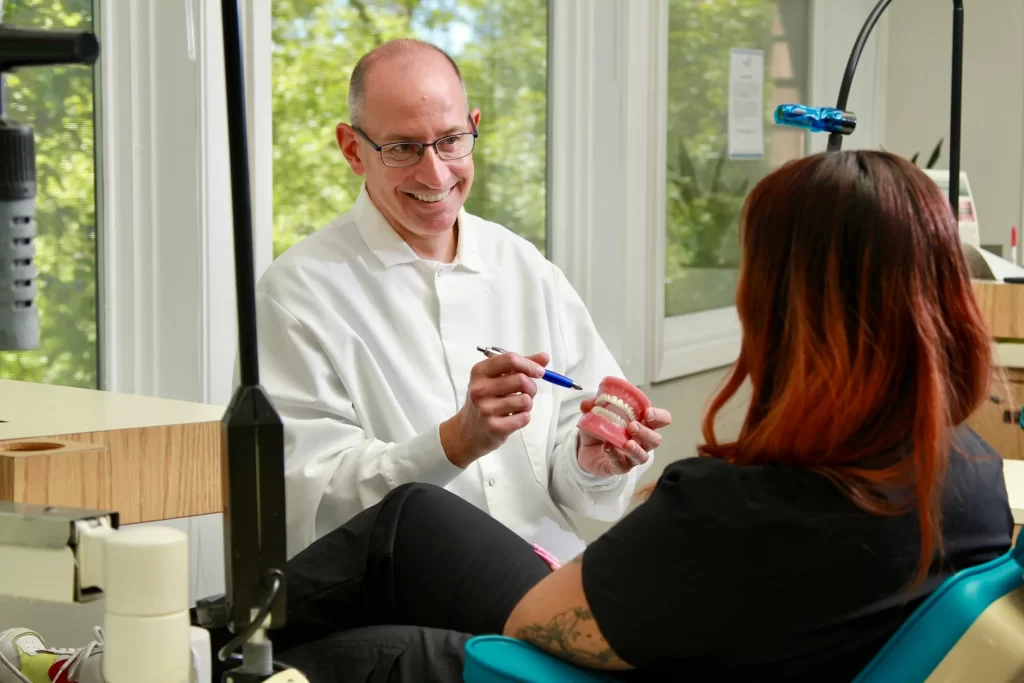
Most jaw-surgery cases move through three stages. First comes a phase of braces to position your teeth for the planned surgery, which can feel counterintuitive because your bite may look worse before it looks better. Next, the oral surgeon repositions the jaws. Finally, a shorter phase of orthodontics fine-tunes the bite as everything settles. Dr. Myers manages the orthodontic phases and works alongside your surgeon throughout. From start to finish, the full process often takes a couple of years, and the results are long-lasting.
Common Questions About
Corrective Jaw Surgery
Does the orthodontist perform the surgery?
No. The surgery is performed by an oral and maxillofacial surgeon. Dr. Myers handles the orthodontic side, the braces before and after surgery, and coordinates your care with the surgeon so the two work as one plan.
Will I need braces as well as surgery?
In most cases, yes. Braces before surgery position your teeth correctly for the procedure, and a shorter phase afterward refines the bite. The orthodontics and the surgery are two halves of the same treatment.
How long does the whole process take?
It varies, but the combined orthodontic and surgical process often runs a couple of years across the three stages. Dr. Myers gives you a realistic estimate for your case once he has evaluated your bite.
Is jaw surgery only about appearance?
No. The main reasons are usually functional, things like chewing, speech, breathing, and jaw pain, with improved facial balance as an added benefit. Whether surgery is the right step is a decision you make with both your orthodontist and your surgeon.
Start With an Evaluation
If you’ve been told you may need jaw surgery, or you’re dealing with jaw pain, an unbalanced bite, or trouble eating or breathing, the place to start is an evaluation. Dr. Myers can assess your bite, explain whether surgery is likely to help, and coordinate with an oral surgeon if it is.
Sacramento
Fair Oaks
Our other treatments